Disponible en salaen
acceso abierto | Sala Raúl Echegaray

Loading...
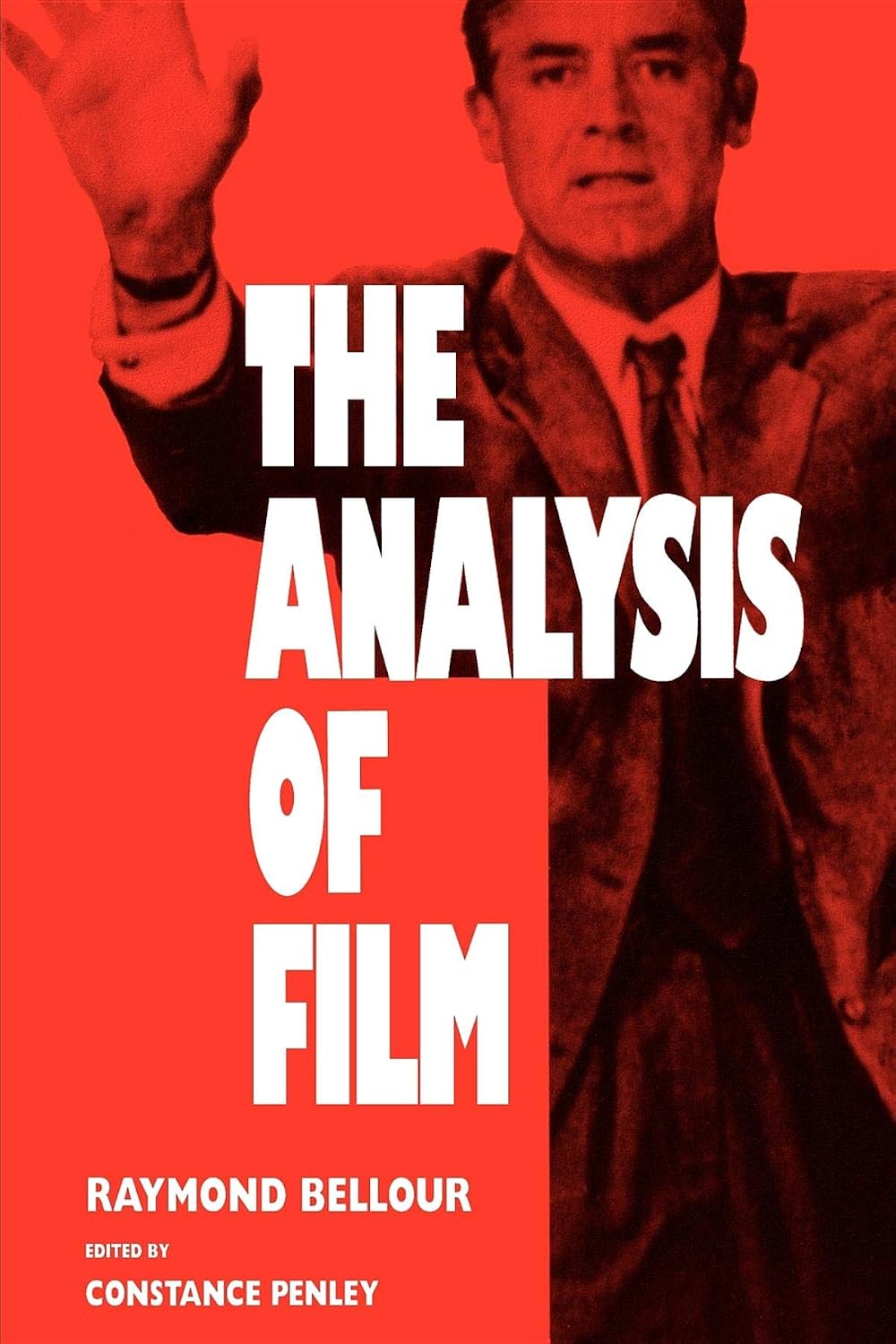
The analysis of film
AÑO
2000
PAÍS DE ORIGENIndiana,

Estados Unidos
EDITORIAL O ENTIDAD EDITORA
Indiana University Press
PÁGINAS
305
IDIOMA
Inglés
DONACIÓN
César B. Gogorza
INCORPORADO AL CATÁLOGO
01.07.2026
CONSULTAS
20
SINOPSIS:“No serious student of film should miss the great work collected in this volume”
– W. A. Vincent, Choice
“When so much writing about film is based on overall impressions or shadowy memories, on notes scribbled in the dark or published shot breakdowns that are often overgeneralized or even inaccurate, it is refreshing to be confronted with such scholarly work, characterized by a genuinely attentive eye and a punctilious observation of detail. This long-awaited collection, gathering Bellour’s ground breaking studies into one volume, will surely be a crucial source of inspiration for future generations of film scholars”
– Peter Wollen, Bookforum
The Analysis of Film brings together Raymonds Bellour’s now classic studies of classic Hollywood film. It is at once a book about the methods of close film analysis, the narrative structure of Hollywood film, Hitchcock’s work –The Birds, Marnie, Psycho, North by Northwest– and the role of the woman in western representation. But, finally, it is a book about cinema itself and the love for cinema that drives the passion for analyzing the supreme art form of the twentieth century.
The book is also a model of how to write about the intricacies of film narrative, shot by shot, sequence by sequence, while addressing larger contextual issues of subjectivity, desire, and identification in Western cultural forms. A new, final chapter on D. W. Griffith’s The Lonedale Operator brilliantly demonstrates that the dynamics of repetition and alternation that Bellour discovered to be the heartbeat of Hollywood narrative film were already there in nascent form at the beginnings of cinema.
¿Cree que algún dato de esta ficha fue omitido o es erróneo?
Envíenos su sugerencia mediante el
formulario de contacto.
 ¡Estás usando un navegador desactualizado!